Journal · 2026-10-29
Why We Ask You to Pause Retinol Before Permanent Makeup
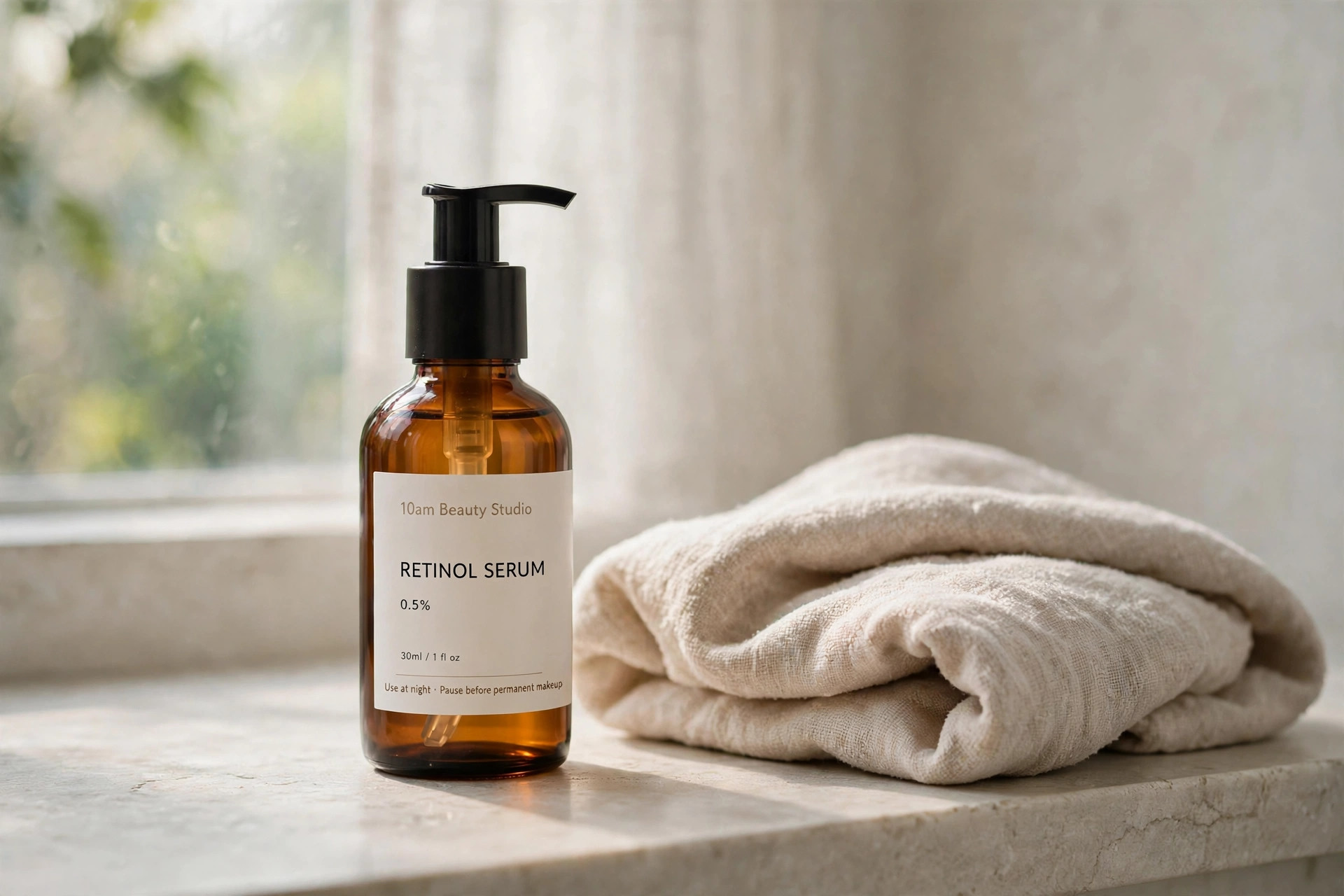
One of the first questions on our intake form is: do you use retinol? Some clients treat it like a trick question — like admitting it will get their appointment canceled. It's not a trap. It's one of the biggest predictors of how your appointment will go, and answering honestly is what protects your result.
Retinol is genuinely great skincare. I use vitamin A products myself. But retinol is doing something very specific to your skin, and that specific thing happens to be the exact opposite of what we need on procedure day.
What retinol does to your skin — the part that matters to us
Retinoids (retinol, retinal, tretinoin, adapalene, and their cousins) speed up cell turnover. That's why skin looks fresher on them. The trade-off is that the outer layers of skin become thinner and more reactive: more sensitive, more easily irritated, more prone to flaking and redness.
In daily life, that's just your skin adjusting. During a PMU appointment, it's a problem — because everything we do depends on the skin behaving predictably at a very precise depth.
Why reactive skin and pigment don't mix
Permanent makeup — whether it's nano hairstroke brows or any other technique — places pigment at a controlled, shallow depth. On calm, stable skin, the pigment lands where we put it and heals evenly. On reactive, retinol-thinned skin, the whole session fights us:
More bleeding. Thinner, more reactive skin tends to bleed more during the procedure. Blood pushes pigment out as it's placed, which means less color stays in the skin where we want it.
More swelling. Swollen skin distorts the area we're working on, which makes precise stroke placement harder — and precision is the entire game.
Patchier healing. When skin is already irritated, it tends to shed and repair in an uneven rhythm. Strokes can heal soft or blurry instead of crisp, and lips can heal with patchy, uneven color.
The worst-case outcome isn't pain — it's a healed result that's noticeably weaker than it should have been, and a touch-up that has to fix retention instead of just refining shape and color. That's why we'd rather reschedule a session than work on skin that isn't ready.
Which products actually count (it's not just "retinol")
When we say "pause retinoids," we mean the whole family: retinol, retinal (retinaldehyde), tretinoin (Retin-A), adapalene (Differin), tazarotene, and retinoid serums in any brand packaging. Many clients use one under a cute brand name without realizing what's inside — which is why we ask for the product photo, not the brand.
Our pause list also covers the other strong actives that keep skin in an exfoliating state: glycolic and other AHA acids, salicylic acid (BHA), strong vitamin C serums, and chemical peels done close to your appointment. Anything whose job is to resurface, peel, or turn skin over counts.
One important note: if your retinoid is prescription, don't just stop it on your own say-so — that's a conversation for you and your prescriber. Most are completely fine with a short pause around a cosmetic procedure, but the decision is theirs, not ours. We just can't do the procedure well while the skin is in that reactive state.
How long to pause — and when you can restart
The rule: stop all of these at least two months before your appointment. Skin needs real time to calm down, not just one skipped night.
And don't reach for them right after, either. Keep retinoids and strong acids away from the treated area until healing is fully finished — roughly two weeks for brows and eyeliner, about a week or more for lips, basically until there's no more flaking and the skin feels normal again. Creams migrate more than people expect: a pea-sized amount of retinol on your forehead travels via your moisturizer and your pillow, so keep your whole routine simple until the area has settled.
What to use instead for the next two weeks
Think boring: a gentle cleanser, a plain fragrance-free moisturizer, and sunscreen during the day. That's it. Your skin doesn't need actives for two weeks — it needs stability. If your skin feels a little dull without its usual routine, that's actually the sweet spot: calm, intact skin that holds pigment beautifully.
The honest bottom line
Nobody at our studio is trying to take your skincare away — we love a good routine. Pausing it briefly is just the difference between pigment that takes beautifully the first time and a healing phase that fights you for two weeks. If you're not sure whether a product counts, send us a photo of the ingredient label before your appointment. We check ingredients, not brand names, and we'd much rather answer a question early than reschedule you late. If you'd like eyes on your skin before booking, a brow mapping consultation includes an honest assessment of whether your skin is ready.
Quick answers
Can I just skip my tretinoin the night before my appointment?
No — one night isn't enough. Retinoids change how your skin behaves for days after the last application. We need at least two months off so the skin calms down and holds pigment properly.
I'm on prescription tretinoin. Do I really have to stop?
That's a decision for you and your prescriber — always check with them before pausing a prescription. What we can tell you is that the procedure doesn't work well on retinoid-reactive skin, so the pause is worth arranging if your prescriber agrees.
What if I already booked and forgot to pause my retinol?
Tell us before your appointment, not after. We may suggest moving your date out by a week or two. Rescheduling feels annoying in the moment, but it's far better than a session with poor retention that needs extra correction work later.
Can I use retinol everywhere except my brows?
Creams migrate more than you'd think — moisturizer, pillow contact, and sweating all move product around. Keep your whole routine simple during the healing period, and keep all actives away until the treated area is fully settled.
Ready for easier mornings?
Start with a custom brow design and see your shape before you commit.