Journal · 2026-10-22
Cold Sores and Lip Blush: What You Need to Know Before Booking
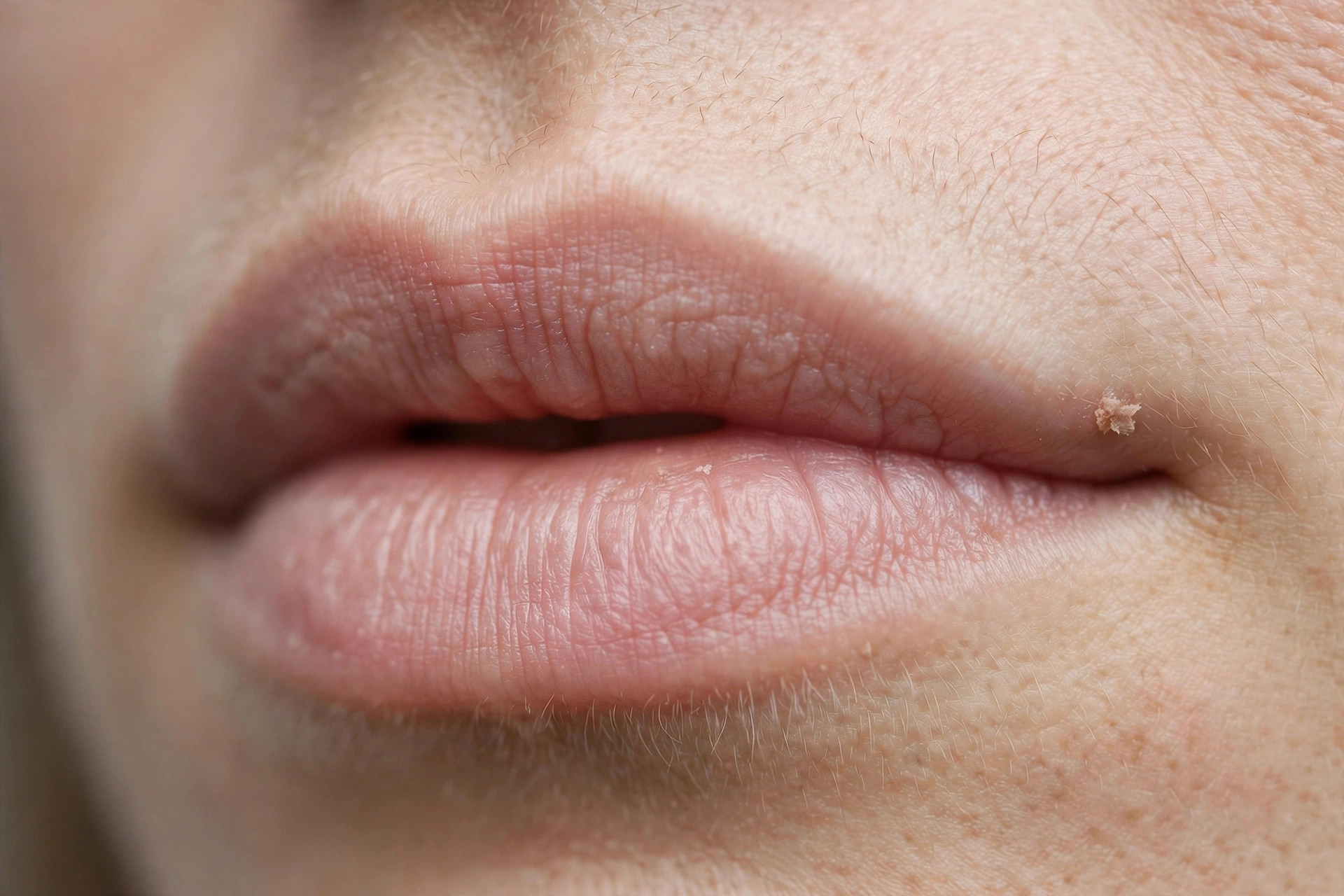
There is a question on my lip intake form that makes almost every client pause: Have you ever had a cold sore? Some people look surprised. A few look sheepish. Most tick "yes" and then immediately ask, "Wait — does that matter?" It matters, and not for the reason people fear. I am not judging your health history. I am protecting your result.
Here is the short version: a huge share of adults carry the virus that causes cold sores, usually picked up years ago and mostly dormant. Any trauma to the lip area — sunburn, stress, chapped lips in winter, and yes, a lip blush procedure — can wake it up. That is the whole conversation. It is not about whether you are "allowed" to get lip blush. It is about planning so a preventable surprise doesn't mess with your healing.
What an outbreak actually does to your lip blush
Lip blush heals through a very predictable choreography: a few days of swelling and intense color, then light flaking, then the color settles over four to six weeks. A cold sore outbreak crashes that choreography. The blistering and crusting breaks up the healing skin in that spot, pigment gets lost with the crust, and when everything settles you can end up with a pale patch or uneven retention right where the sore was.
It does not ruin the whole lip — but it does mean more work at the touch-up session, a longer healing window than you planned for, and a result that took the scenic route. The pigment itself is fine; it is just that the sore stole some of it on the way out. Knowing this in advance is the difference between an annoyance we fix at the touch-up and a panic that makes you think the whole procedure went wrong.
Rule one: never book while you have an active sore
This is non-negotiable in my studio. If you wake up on appointment day with a cold sore — or even the tingle that says one is coming — tell me and we move the appointment. I would far rather reschedule than work over healing skin, because pigment placed over an active sore will not retain properly and the area is simply not in a condition to be tattooed.
The same goes for the days before. If you had one recently, wait until the skin is fully back to normal — not scabbed, not just faded, but genuinely healed. A good rule of thumb I give clients: if you are still covering it up, you are not ready to book. Bring me a calm, intact lip and the rest is easy.
The antiviral conversation — where my lane ends
Now the part where I have to be blunt about what I am not: I am not a doctor, and I cannot prescribe anything or tell you what to take. What I can tell you is what responsible planning looks like, because clients with a cold sore history do this well every week.
Many of my lip clients talk to their own doctor or pharmacist before the appointment — not the day before, but a week or two ahead — and ask whether they should have anything on hand around the procedure. That conversation belongs between you and a medical professional who knows your history. My job is to make sure it happens, not to run it.
Here is what I ask for from my side: if you have ever had a cold sore, mention it at the lip blush consultation, tick "yes" on the form without embarrassment — it is genuinely one of the most common yeses I see — and come in with a plan you made with your doctor. That is it. The clients who plan ahead heal exactly like everyone else, and the topic never comes up again.
If one shows up during healing anyway
Even with planning, it can happen. The procedure itself is a trigger, and sometimes your lips just decide to throw a party. If you feel the tingle or see a sore during the healing weeks, do not panic and do not pick at it. Contact a healthcare professional promptly and tell me right away. Most of the time we simply note where it happened and even out that spot at the touch-up visit.
The one thing that turns a small setback into a real problem is messing with it — picking crusts, applying random products, or trying to "fix" the color yourself. The healing lip is doing a lot of quiet work under the surface; your only job is to leave it alone and keep me posted. I have seen this play out many times, and the clients who resist the urge to intervene always heal the cleanest.
A quick note for my dark lip neutralization clients
This applies to you just the same — arguably more, since dark lip neutralization often involves multiple sessions, which means multiple healing windows. If you are prone to cold sores, plan with your doctor for the series, not just the first visit. The same care that protects session one protects session two and three.
The bottom line
Cold sores do not disqualify you from lip blush. They just make you a client who plans one step ahead — and honestly, those are my favorite clients. Tick yes on the form, talk to your doctor early, never book over an active sore, and let me know if anything shows up during healing. The color will do what color does: fade gradually over 1 to 3 years; exact fading depends on the pigment, your skin, and aftercare, gracefully, with no drama.
Thinking about lip blush and not sure where you stand? Take the 60-second quiz and bring your cold sore history to the consultation — I will tell you honestly whether you are ready to book or whether waiting a few weeks gets you a better result.
Quick answers
Can I get lip blush if I get cold sores?
Yes — a cold sore history does not disqualify you. Plan ahead: mention it at your consultation, talk to your own doctor or pharmacist well before the appointment, and never book while you have an active sore. Clients who plan heal just as well as everyone else.
What happens if I get a cold sore while my lip blush is healing?
The blistering and crusting can pull pigment out of that spot, leaving a pale patch once healed. Don't pick at it, keep following aftercare, and tell your artist — it is usually evened out at the touch-up session. I'm not a medical professional, so any questions about treatment go to your doctor.
How long should I wait after a cold sore before booking lip blush?
Wait until the skin is fully back to normal — not scabbed, not just faded, but genuinely healed. If you're still covering it up, you're not ready yet. When in doubt, ask at your consultation and let your artist see the area.
Will my artist prescribe antivirals for me?
No. A PMU artist cannot prescribe medication or advise you on what to take. Talk to your own doctor or pharmacist a week or two before your appointment — that conversation belongs between you and a medical professional who knows your history.
Ready for easier mornings?
Start with a custom brow design and see your shape before you commit.